
Last updated November 25, 2026
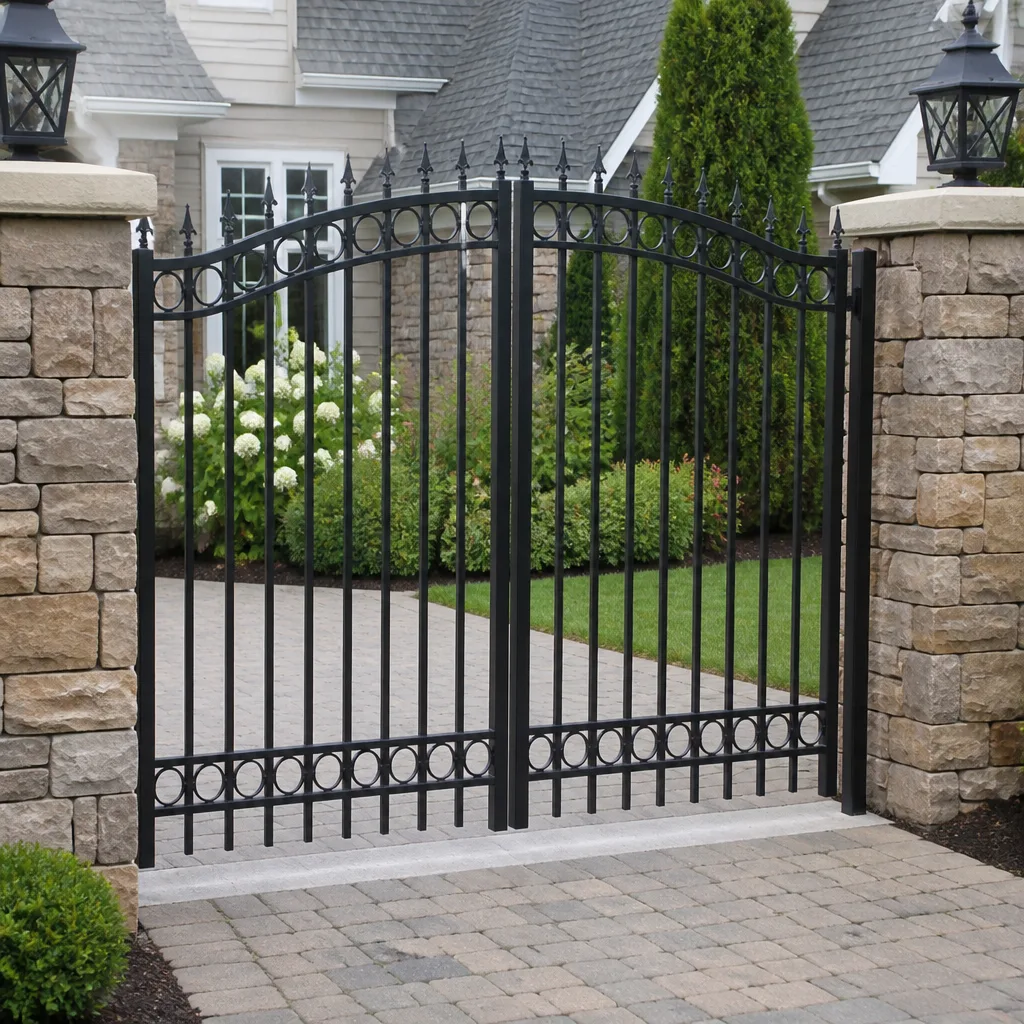 Wrought iron
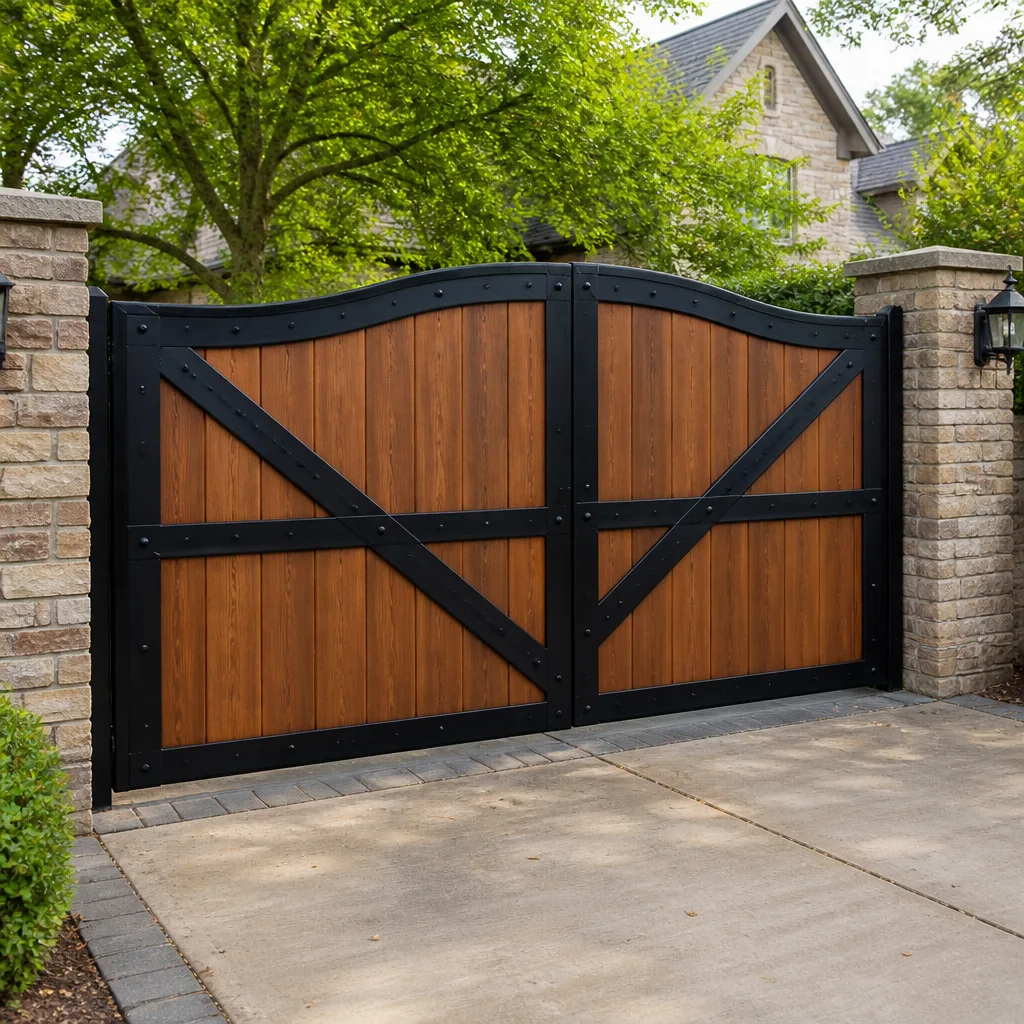 Wood & steel frame
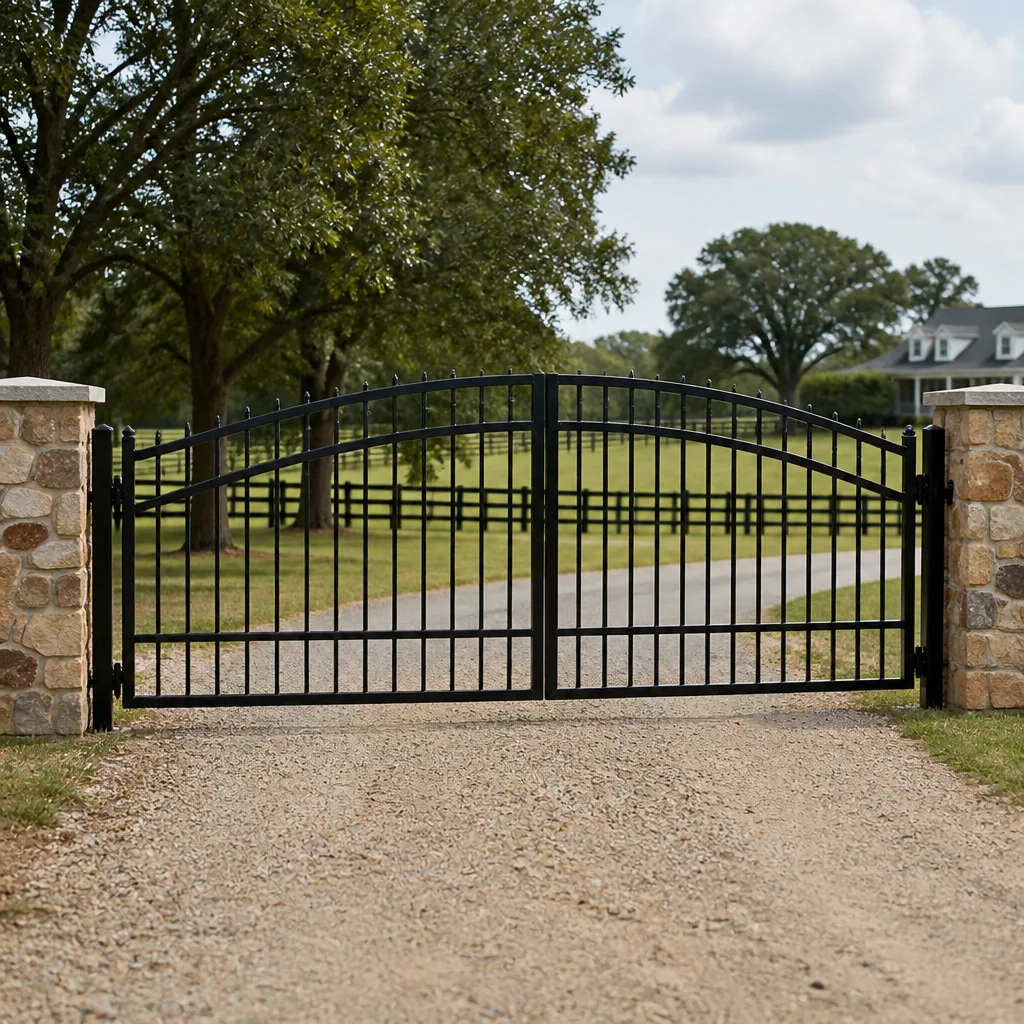 Farm & ranch
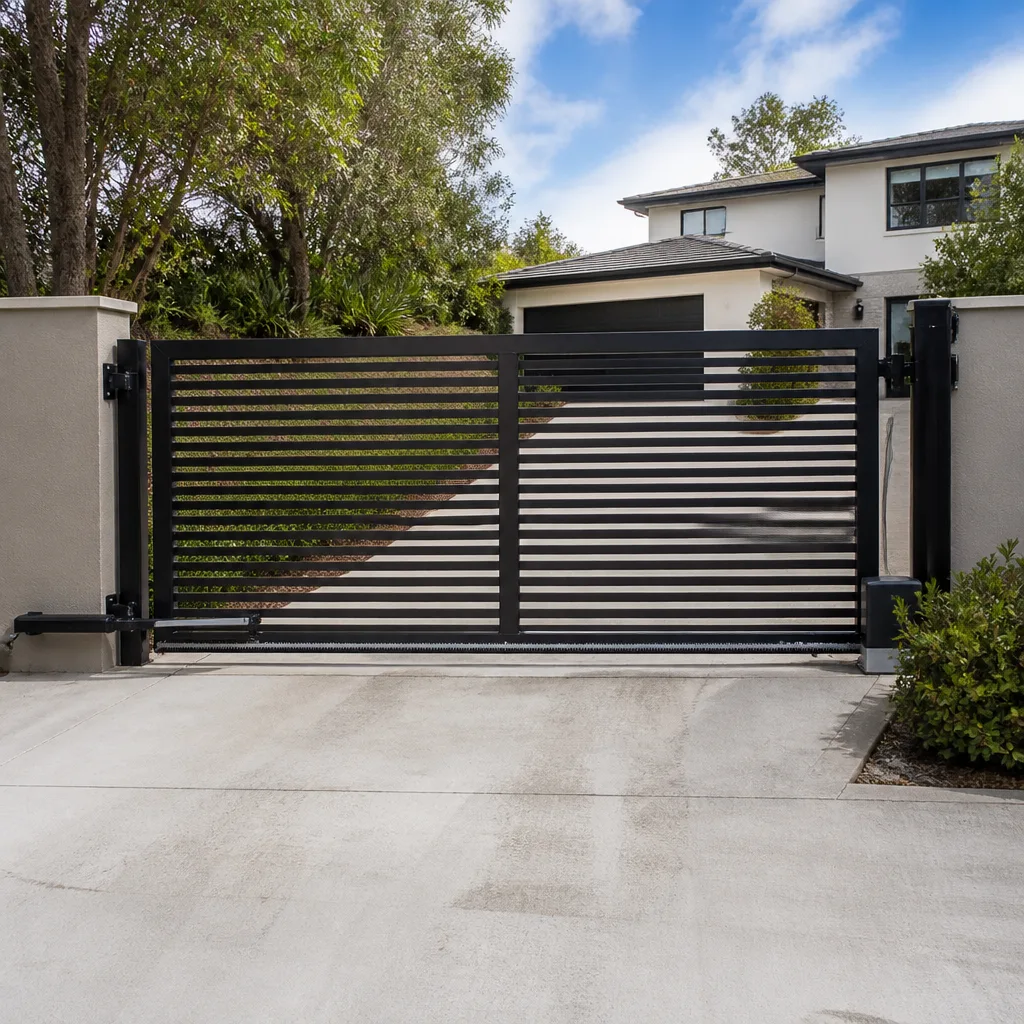 Sliding driveway gates
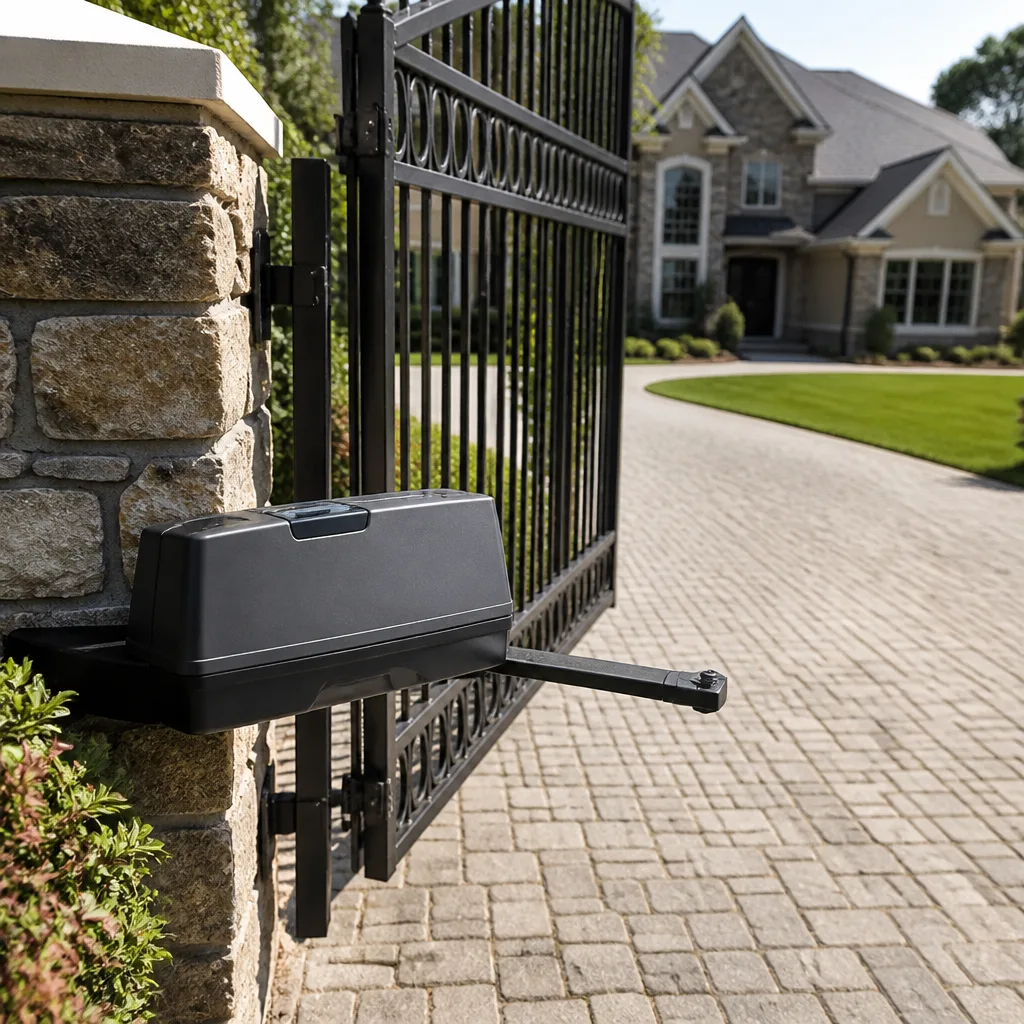 LiftMaster operators
Free on-site gate assessment - hinges, posts, and your LiftMaster or Nice gate operator checked before anything is quoted
The assessment is free and the quote is the invoice.
Get your free estimateDIY vs Professional Gate Repair: The Laurelhurst Homeowner’s Decision Guide
Most homeowners assume the dividing line between a DIY gate repair and a professional one is electrical: volts, amps, wiring, the fear of a shock. In our experience across Laurelhurst, that’s rarely the real risk. Gate operators commonly run on low-voltage DC logic circuits that a careful homeowner can touch without danger. The hazard sits a few feet away, in the 300 to 500 pounds of steel or wood the operator is moving, and in the safety systems built to stop that mass when something gets in its path. This guide lays out which gate tasks are genuinely safe to handle yourself, which need caution, and which belong to a professional, plus how to diagnose a problem before you call so the quote comes back fast and accurate.
Quick Answer
In Laurelhurst, most gate repairs split cleanly into three tiers. Remote programming, lubrication, and sensor cleaning are safe for a competent homeowner. Limit switch adjustments and hinge tightening are doable with caution. Operator wiring, post and footing work, and any repair where the gate could fall or crush belong to a professional. When in doubt about moving weight or safety edges, call a specialist. Gate Repair Laurelhurst offers free estimates.
Styles & brands we work with
- Wrought iron
- Wood & steel frame
- Farm & ranch
- Sliding driveway gates
- LiftMaster operators
Table of Contents
- The Three Tiers of Gate Repair: What’s Safe to DIY
- Why the Danger Isn’t the Electricity
- Liability and Insurance: What DIY Gate Work Means in Oregon
- When YouTube Is Reliable and When It Isn’t
- The Real Cost Comparison: When DIY Saves and When It Costs More
- The Diagnostic Step Worth Doing Yourself First
- How Laurelhurst Weather and Lots Shape Gate Wear
- Brand Matters: DoorKing, LiftMaster, and Mighty Mule
The Three Tiers of Gate Repair: What’s Safe to DIY
Nearly every gate call we handle in Laurelhurst fits into one of three buckets. Getting clear on which bucket your problem belongs to is the whole decision. The tier depends less on how handy you are and more on what part of the system you’re touching.
Tier 1: genuinely DIY-safe. These tasks involve the controls and surfaces, not the moving mass or the wiring:
- Programming or re-pairing a remote, keypad, or entry code.
- Lubricating hinges, rollers, and the track on a sliding gate with the manufacturer’s recommended product.
- Cleaning the photoelectric safety sensors and clearing spider webs, leaves, and debris from their lenses.
- Clearing obstructions from the gate’s path and resetting a tripped operator by cycling the power at the breaker.
- Replacing batteries in a keypad or remote.
Tier 2: proceed with caution. These need patience and a second person, and they’re where DIY starts to cost time:
- Adjusting a limit switch that stops the gate slightly short or over-travels. Small increments, test after each change.
- Tightening a loose hinge or bracket bolt with the gate immobilized.
- Re-aligning a sagging gate that’s dragging on the ground, if the cause is a loose fastener rather than a failing post.
Tier 3: professional only. These carry real injury or liability risk, and we tell Laurelhurst homeowners to stop here:
- Any wiring inside the operator or control box, or running power to the operator.
- Post and footing repair, since a gate’s weight rides on the post.
- Repairing or replacing a counterbalance spring on a swing gate, which stores enormous force.
- Adjusting or bypassing safety edges and photo-eyes on an automated gate.
- Any repair where a heavy panel could fall, crush, or come off its track.
Why the Danger Isn’t the Electricity
When a driveway gate in Laurelhurst stops working, the first instinct is often to assume the operator is dangerous to touch. In practice, the low-voltage DC logic on a typical residential operator is not where the hazard lives. The operator’s job is to move a heavy panel, and that panel is the risk.
Think about what a swing gate or a sliding gate weighs. A full-size driveway panel can run 300 to 500 pounds, sometimes more on commercial-grade systems. The operator applies force to move it, and the safety devices, the photo-eye beam and the safety edge, exist to stop that force the instant something crosses the path. A person standing between a moving panel and its closing point has very little margin. A homeowner who disables a safety edge to “get it working” removes the one system designed for that exact scenario.
The mechanical risk runs a second thread too. On a sliding gate, rollers can jump the track and the panel can tip. On a swing gate, a worn hinge can let a panel drop. These aren’t electrical problems, and no amount of care with the wiring changes them. When a repair touches the moving mass or the systems that guard it, that’s a professional’s job. When it only touches the controls, a careful homeowner can usually manage.
Our gate repair work starts with identifying which of those two worlds a problem is in. Knowing that line yourself saves you both money and risk.
Liability and Insurance: What DIY Gate Work Means in Oregon
Here’s the part most DIY guides skip. If a gate you modified causes injury or property damage, the liability can land on you. That’s true whether the gate is at your own home or at a small commercial property you manage in Laurelhurst.
Homeowner and property insurance policies generally expect maintenance to be done to a reasonable standard, and a gate is a mechanized, moving piece of equipment. A homeowner who rewires a control board or disables a safety edge and later has a delivery driver injured at the gate is in a very different position than one who left that work to a trained technician. Insurers look at whether the work was done correctly, and the burden of proof tends to fall on the person who did it.
Oregon law and local code details vary, so we don’t claim to interpret them for you. What we can say is general: many cities require a permit for structural gate work or for electrical work run to an operator, so it’s worth a call to your city’s building department before you start anything beyond the Tier 1 tasks. Ask specifically whether your repair needs a permit, and keep any receipts and instructions if you do the work yourself.
If you own or manage a commercial gate, the stakes are higher, and a professional repair protects you and your insurer alike. For anything beyond controlling the gate, professional hands are the safer path. Call (844) 494-1604. We answer 24/7. Fast dispatch from 7am to 7pm, Sunday through Friday.
When YouTube Is Reliable and When It Isn’t
A step-by-step video is a genuine help for some gate tasks and a genuine trap for others. The way to tell the difference is simple: does the task involve moving mass or the safety systems, or does it involve settings and surfaces?
Videos are usually reliable when the task is:
- Programming a remote or keypad sequence.
- Cleaning sensors and clearing the gate’s path.
- Lubricating a hinge or roller with the maker’s recommended product.
- Changing batteries or resetting a tripped operator.
Videos are risky when the task involves:
- Wiring inside the operator or control box, because the video may not match your board or your power setup.
- Limit switch and torque adjustments, because a wrong setting can change how hard the gate closes against an obstruction.
- Safety edge or photo-eye adjustments, because those systems are engineered to a specific standard.
- Post, footing, spring, or track work, because a single mistake can drop or release a heavy panel.
The danger is that a video for one brand’s operator looks almost identical to a video for another’s. A DIYer following a Mighty Mule tutorial on a DoorKing control board can end up in the wrong menu entirely. We’re experienced with systems from nine manufacturers, and we still confirm the exact model and revision before touching a control board. If you can’t match your system to the video exactly, treat the video as unreliable. If you’ve got a problem in the risky column, a call is cheaper than a panel drop. Our Gate Repair Laurelhurst team can point you the right way before you break out a ladder.
The Real Cost Comparison: When DIY Saves and When It Costs More
DIY saves money in a narrow, predictable band. It costs money when a small mistake turns into a bigger professional repair. The math isn’t about the hourly rate; it’s about what a botched attempt adds to the bill.
DIY usually wins when:
- The task is a Tier 1 setting or cleaning job. You’ll spend minutes, not a service visit.
- The problem is a simple remote, battery, or debris issue a reset fixes.
- You’re comfortable isolating the gate at the breaker and taking your time.
DIY tends to cost more when:
- You misdiagnose a sensor failure as a wiring fault and replace a working part.
- A limit adjustment leaves the gate closing too hard, and the operator strains or the panel binds.
- You force a seized bolt and shear it in the post, turning a tightening job into a post repair.
- You disable a safety edge to get the gate moving and now have to have it reinstalled properly.
In our experience running jobs across Laurelhurst, the most expensive repairs start as a small DIY attempt that went sideways. That doesn’t mean DIY is wrong; it means scope the job honestly before you start. If a task needs a part or a setting you can’t confirm, stop and get an estimate. Gate Repair Laurelhurst gives free estimates, and the price is quoted and agreed before any work starts. For a cheaper, faster result, the written quote is where the real cost comparison gets decided. Call (844) 494-1604. We answer 24/7. Fast dispatch from 7am to 7pm, Sunday through Friday.
The Diagnostic Step Worth Doing Yourself First
The one thing always worth doing yourself before you call is a clean diagnosis. It makes the estimate faster and more accurate, and it tells the technician exactly where to look. Here’s how we suggest Laurelhurst homeowners run it:
- Note the failure precisely. Does the gate not move at all, move partway, reverse mid-travel, or make a new noise? Write down exactly what happens.
- Check the obvious. Remote battery, keypad battery, breaker, and whether anything in the path blocks the photo-eye. Clear leaves and web from the sensor lenses.
- Watch the safety systems. With the gate stopped and clear, look for a broken photo-eye lens or a safety edge with a visible cut. Don’t disable them to test.
- Listen to the operator. A hum with no movement suggests a mechanical bind or a dead start capacitor. A clicking with no movement can point at the control board. Silence is often power or a tripped operator.
- Photograph the labels. Find the model and revision on the operator housing and on the control board, and photograph them.
- Write it up. When you call, lead with the failure type, the model, and the safety-system status. That’s the difference between a fast, accurate quote and a guessing game.
Confirming the model upfront is the single most useful thing you can do. Our technicians work on gate motor & opener systems across nine brands, and a confirmed model means we bring the right part or at least know what to expect before the visit. If you can’t find the label, that’s fine; say so, and we’ll bring what’s needed. Call (844) 494-1604. We answer 24/7. Fast dispatch from 7am to 7pm, Sunday through Friday.
How Laurelhurst Weather and Lots Shape Gate Wear
Laurelhurst sits in Portland’s wet-winter, dry-summer climate, and that cycle works on gates in ways homeowners don’t always anticipate. The details below are general observations from the jobs we run here, not a promise about any single gate.
The rainy season is where most wear begins. Wood panels swell, steel bolts and fasteners corrode, and wet soil around a post can let it settle. That settling is a common reason a gate starts dragging on the ground or swinging out of alignment by spring. When the ground dries and the swelling reverses, some of that alignment returns and some doesn’t, and the leftover is what needs attention. A gate that sags only in the wet months is telling you the post or the footing wants a look.
Laurelhurst’s mature trees are the other factor. Leaf litter collects in tracks, on rollers, and against safety sensors, and debris under a sliding gate can lift the panel off its rollers over time. The neighborhood’s aging homes often have gates installed years ago, so the hinge and roller hardware is due for inspection around the same time. A quick seasonal walk-around, clearing debris and checking fasteners before the wet season, does more for gate longevity than any single repair.
When weather has pushed a gate past a DIY fix, gate installation or repair may be the cleaner answer, and we can tell you which after an on-site look. Call (844) 494-1604. We answer 24/7. Fast dispatch from 7am to 7pm, Sunday through Friday.
Brand Matters: DoorKing, LiftMaster, and Mighty Mule
Brand fluency is one of the reasons a specialist quote lands closer to a DIY cost than you’d expect. Each manufacturer builds its controls and parts differently, and matching the repair to the brand is half the job.
A DoorKing system is common on commercial and secured residential access points, and its control boards and access panels are built to a different standard than an entry-level brand. A LiftMaster operator shares some logic with garage systems but its gate controls are their own thing. A Mighty Mule system is the DIY-friendly end of the market, and its parts and settings are often the most approachable for a homeowner to work with. None of these brands is “better”; they’re just different, and a video that nails one can miss the others.
We work on the brand you already have, which means we’re not going to steer you toward replacing a working operator just because we favor a different one. Our technicians have up to 8 years of experience diagnosing and sourcing parts for the systems we see across Laurelhurst, so a repair stays a repair and not an upsell. If you’ve done the Tier 1 diagnostic and want a second set of eyes on the model, we can help confirm what’s installed and what it needs. Call (844) 494-1604. We answer 24/7. Fast dispatch from 7am to 7pm, Sunday through Friday.
Common Mistakes to Avoid
- Disabling a safety edge or photo-eye to get the gate moving. That’s the system designed to stop the gate if someone crosses its path; a Laurelhurst gate with a dead safety eye is a liability waiting to happen.
- Following a video for the wrong brand. A Mighty Mule tutorial on a DoorKing board can put you in the wrong menu with no undo. Match the model label before you trust a tutorial.
- Forcing a seized bolt. Wet Laurelhurst winters corrode fasteners, and a sheared bolt turns a two-minute tightening into a post repair.
- Adjusting the limit switch too far. Over-traveling a gate strains the operator and can drive the panel into its stop. Small increments, tested each time.
- Skipping the permit question. Many cities require a permit for structural or electrical gate work, so a call to your city’s building department is worth the five minutes before you start.
- Ignoring a sag that only shows up in the wet season. A gate that drags in the rain is often telling you the footing or post needs attention, and that’s a professional call.
- Replacing parts before diagnosing. A new sensor doesn’t fix a dead breaker, and a new board doesn’t fix a stuck limit switch. Run the diagnosis first.
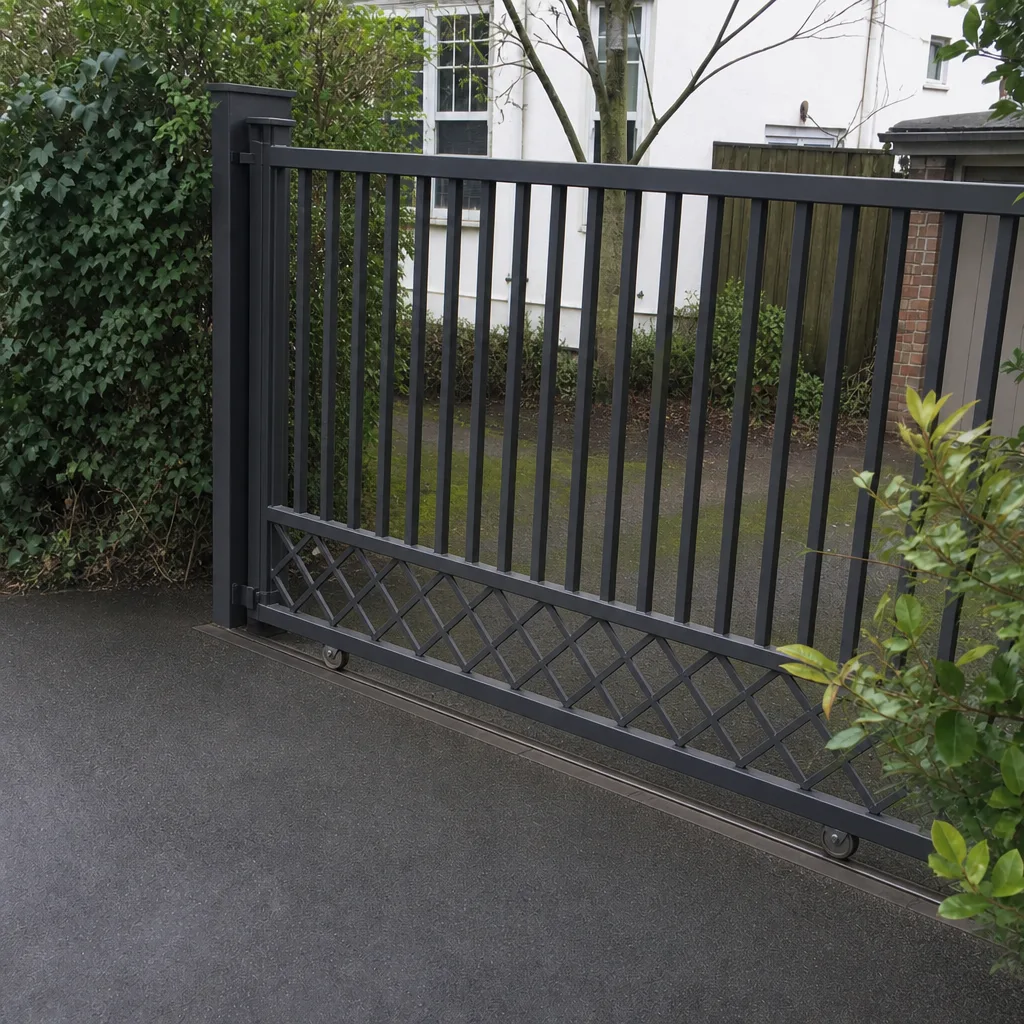
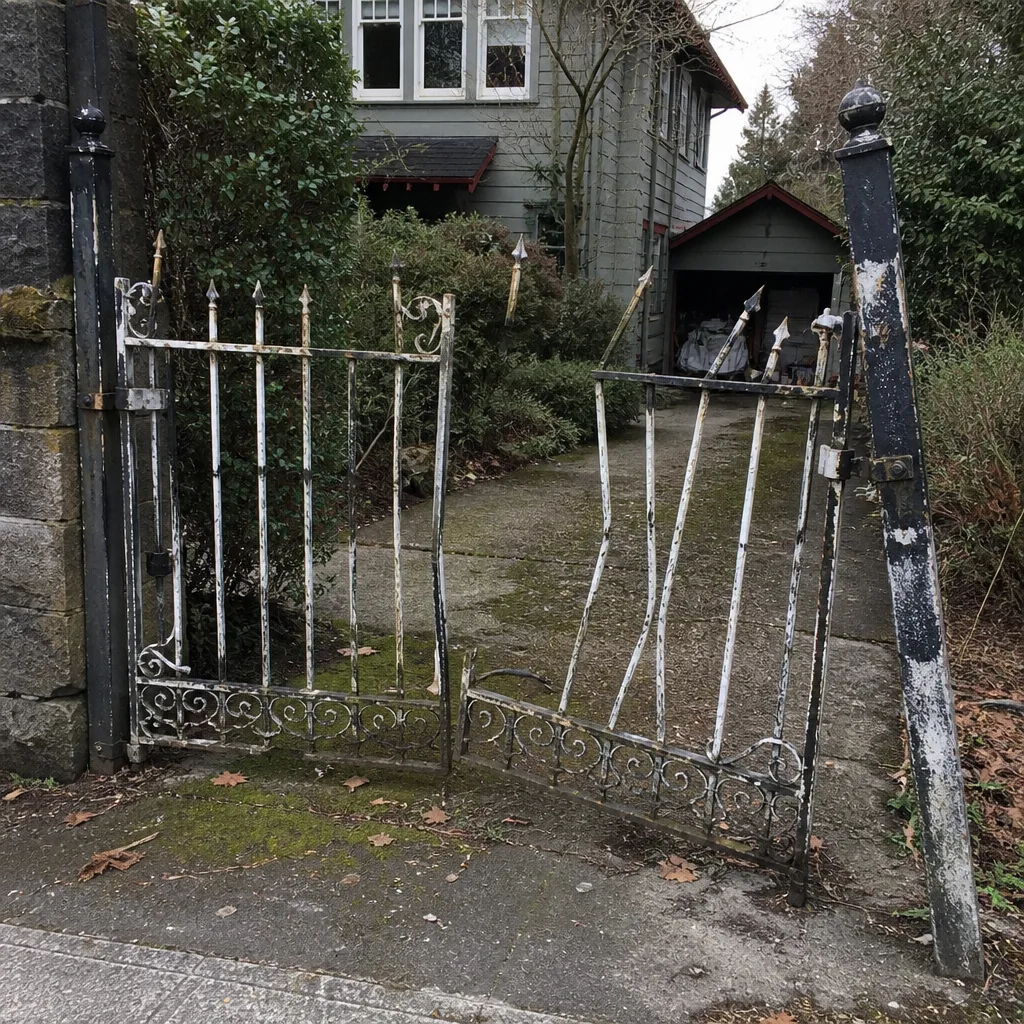
See the difference
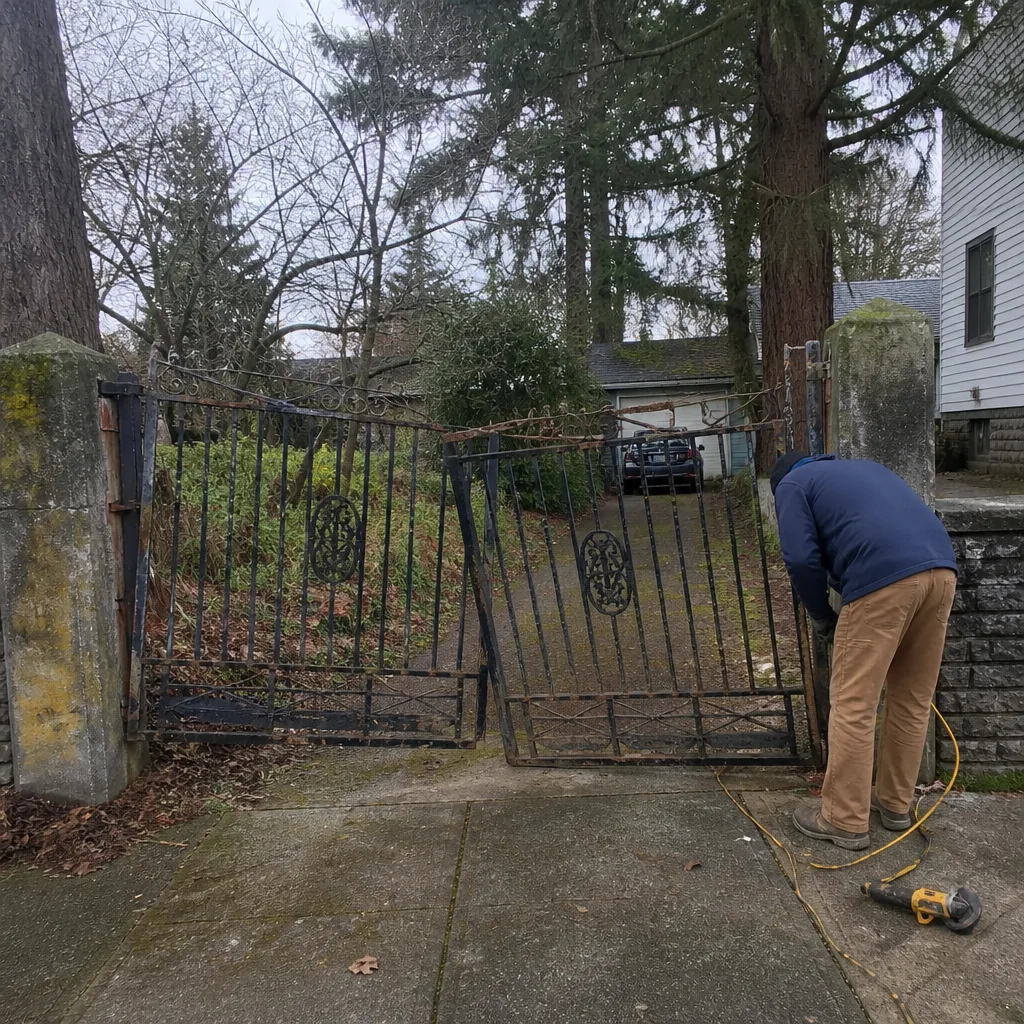 Before
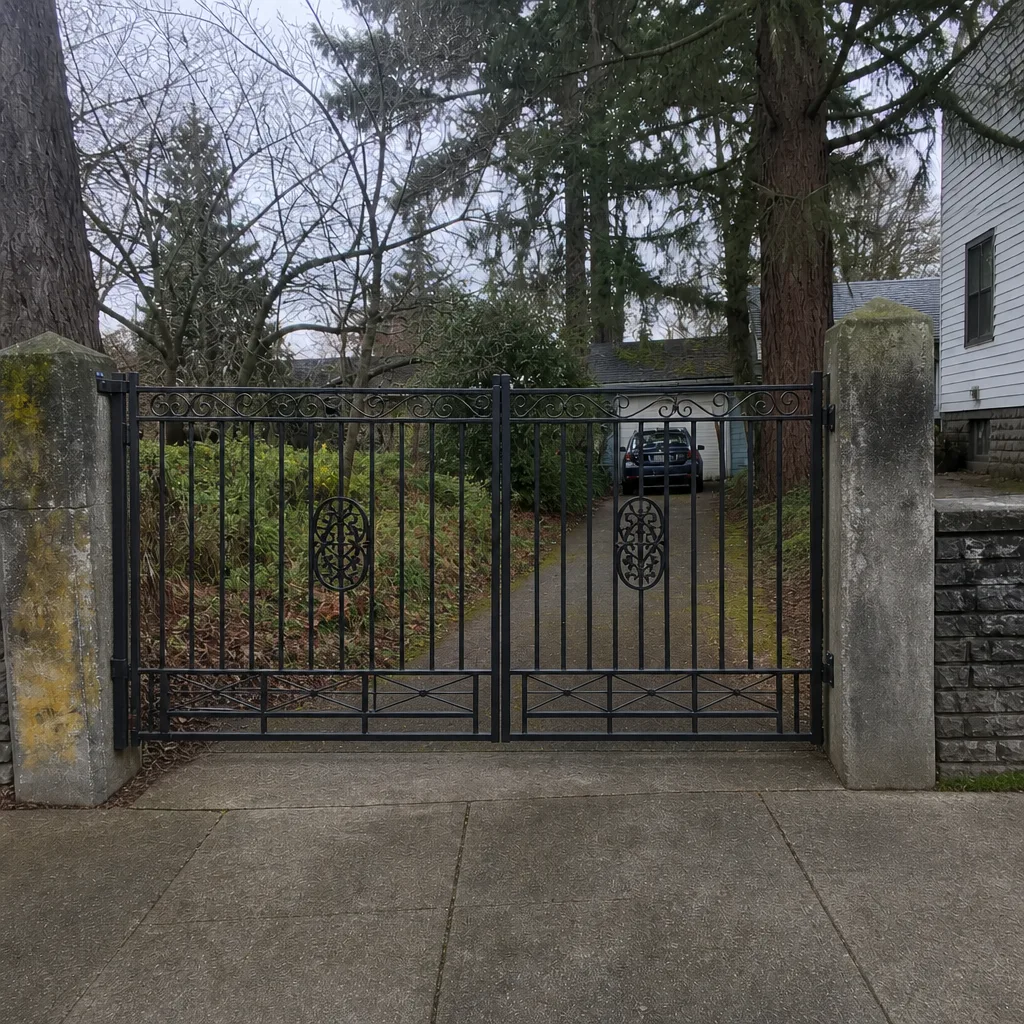 After
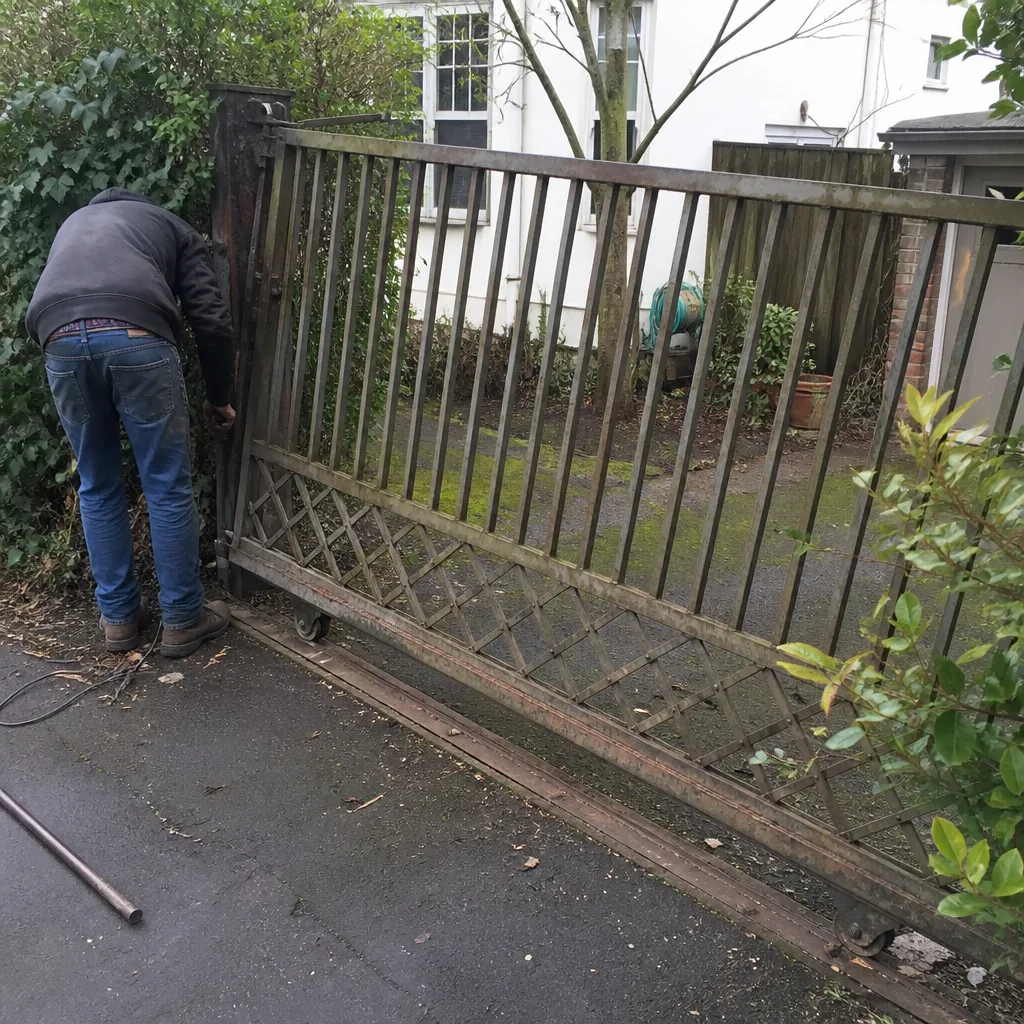 Before
 After
 Before
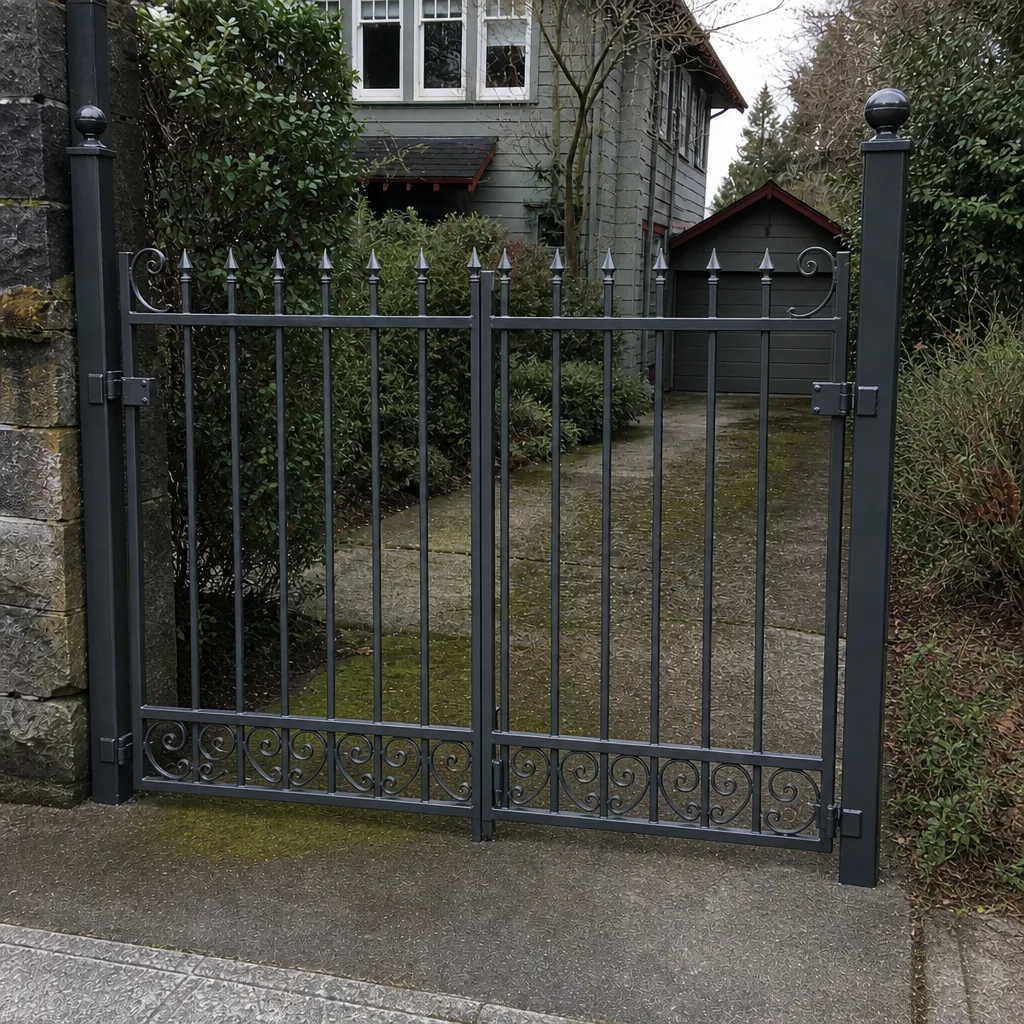 After
When to Call a Professional
Call a professional when a repair touches the moving mass, the wiring, the post, or the safety systems. That covers anything from a panel that won’t track straight to a control board that’s dead to a safety edge that’s been hit. It also covers any gate that could injure someone if it failed mid-repair, which is most heavy gates. If you’ve done the diagnostic and the problem is beyond a setting or a cleaning, don’t gamble.
Gate Repair Laurelhurst offers free estimates in Laurelhurst. Call (844) 494-1604. We answer 24/7. Fast dispatch from 7am to 7pm, Sunday through Friday. Our technicians have up to 8 years of experience, and we’re experienced with the brand you already own. If you’d rather measure and consider a new system, we can quote that too.
Frequently Asked Questions
Yes for Tier 1 tasks: programming remotes and keypads, lubricating hinges and rollers, cleaning sensors, and clearing the gate’s path. Limit switches and hinge tightening are doable with caution. Anything touching operator wiring, posts, footings, counterbalance springs, or safety edges belongs to a professional. When in doubt about moving weight, call (844) 494-1604. Estimates are free.
The low-voltage DC logic on most residential operators isn’t the main danger; the moving gate is. Rewiring also risks disabling the safety systems that stop that gate against a person or object. For any control-box wiring, use a professional. Call (844) 494-1604. We answer 24/7. Fast dispatch from 7am to 7pm, Sunday through Friday.
It can. If a gate you modified causes injury or damage, liability can land on you, and insurers tend to look at whether the work was done to a reasonable standard. For anything beyond a Tier 1 task, a professional repair protects you and your insurer. We don’t interpret Oregon law or your policy for you, so check with your insurer on specifics. Call (844) 494-1604 for a free estimate.
In most cases, yes. We’re experienced with systems from nine manufacturers, including DoorKing, LiftMaster, Mighty Mule, Elite, and others, and we source parts for the system you own rather than pushing a replacement. Photograph the model label on your operator and have it ready when you call. Call (844) 494-1604. Estimates are free.
Cost depends on the job and the part, and we don’t quote a price before we see the gate. The estimate is free, and the price is quoted and agreed before any work starts. Run the diagnostic first, then call with the failure type and the model to get a fast, accurate quote. Call (844) 494-1604. Estimates are free.
Have the failure type (won’t move, reverses, makes a noise), the operator make and model from the label, the safety-system status, and whether the gate is a swing or a slide. That gets you a faster and more accurate estimate. Call (844) 494-1604. We answer 24/7. Fast dispatch from 7am to 7pm, Sunday through Friday.
The Bottom Line
The DIY question isn’t about your skill; it’s about scope. Tier 1 tasks like remotes, lubrication, and sensor cleaning are genuinely safe and save you real money. Tier 2 tasks like limit switches and hinge tightening need patience and a second person. Tier 3 tasks such as wiring, post work, counterbalance springs, and safety edges belong to a professional, because the danger is the moving weight, not the voltage. Run a clean diagnosis before you call and the quote comes back faster. Gate Repair Laurelhurst offers free estimates for Laurelhurst homeowners and property managers. Call (844) 494-1604. We answer 24/7. Fast dispatch from 7am to 7pm, Sunday through Friday.
Written by the team at Gate Repair Laurelhurst.