
Last updated November 25, 2026
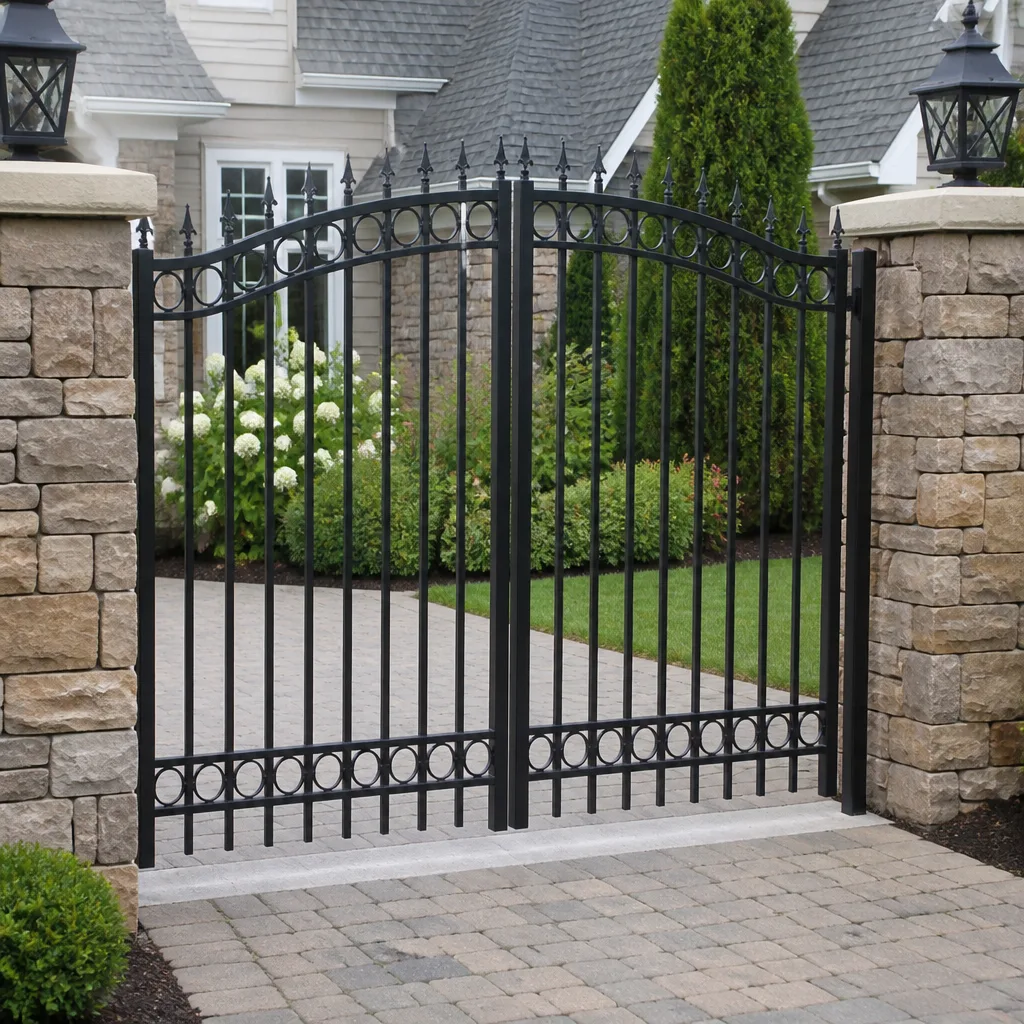 Wrought iron
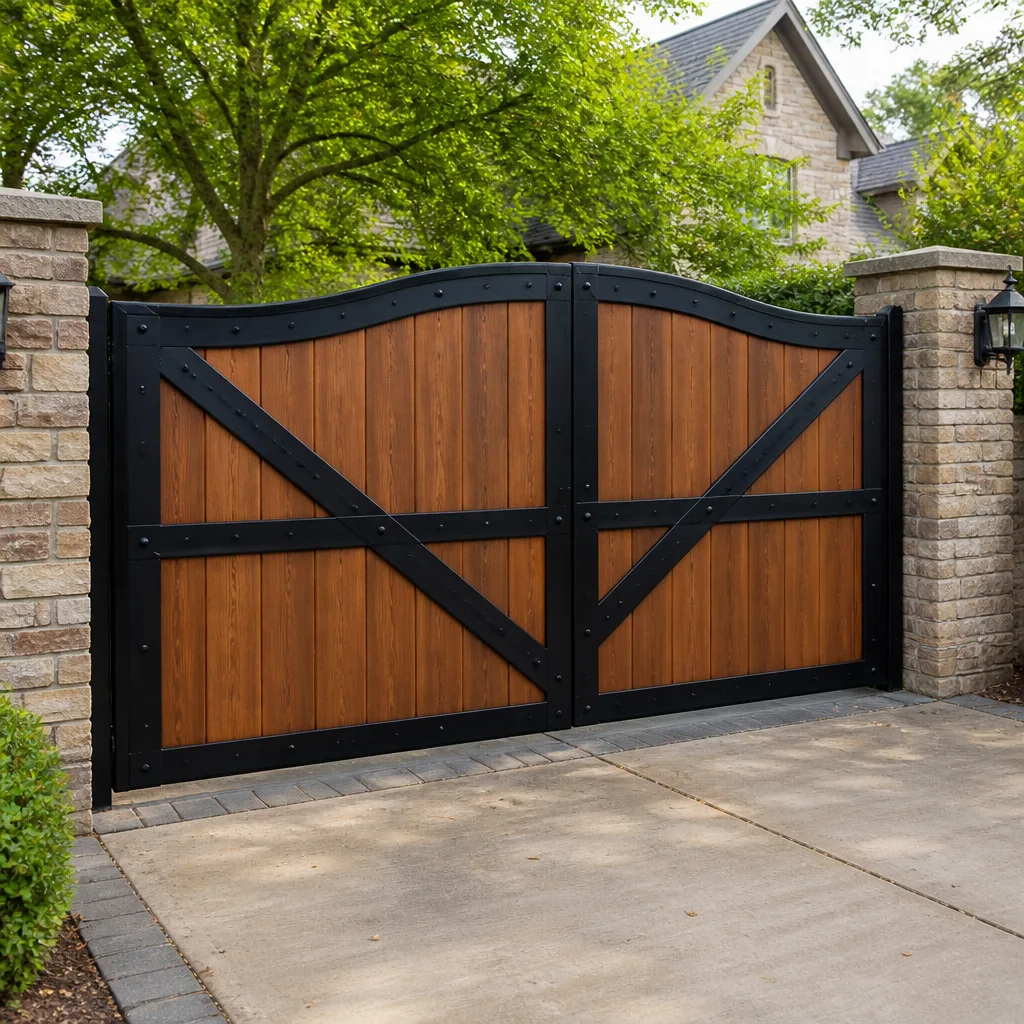 Wood & steel frame
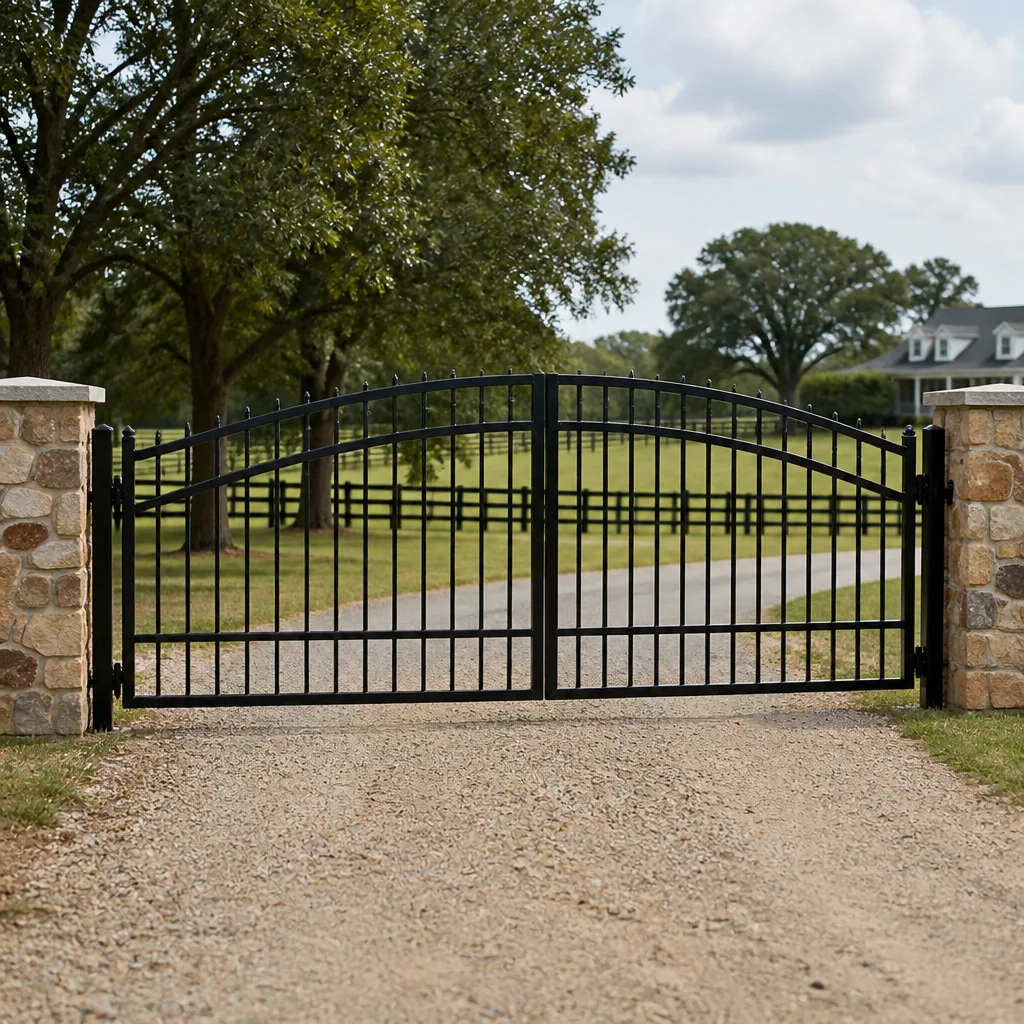 Farm & ranch
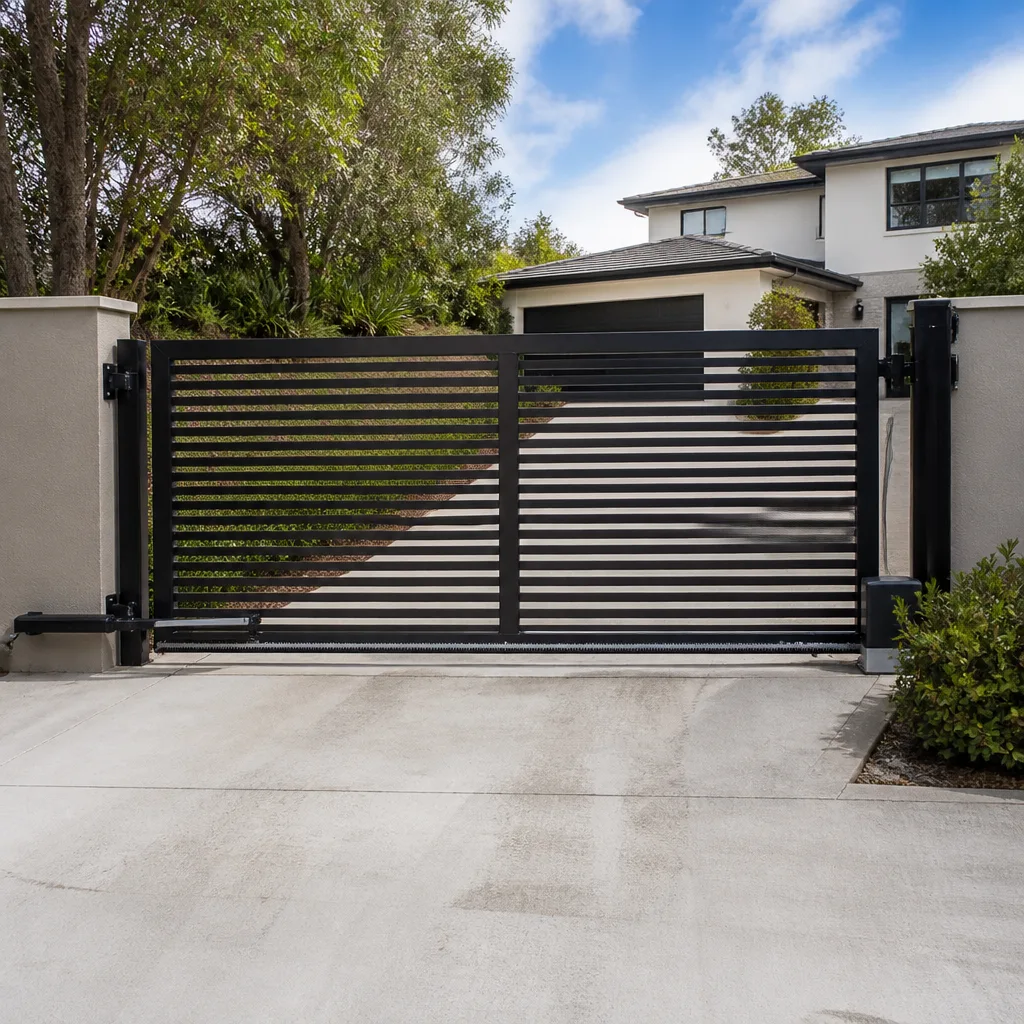 Sliding driveway gates
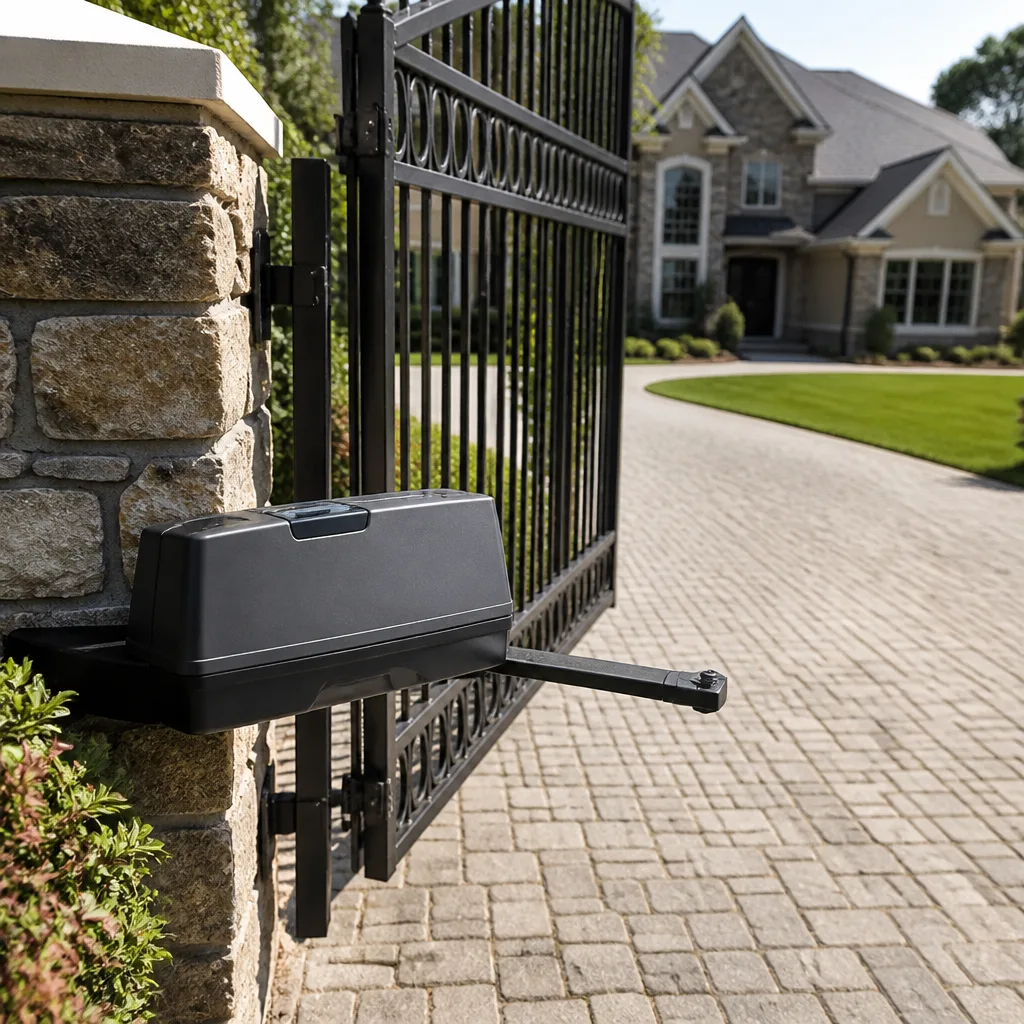 LiftMaster operators
Free on-site gate assessment - hinges, posts, and your LiftMaster or Nice gate operator checked before anything is quoted
The assessment is free and the quote is the invoice.
Get your free estimateSeasonal Gate Repair Care for Laurelhurst: Year-Round Homeowner’s Guide
Laurelhurst gates don’t fail loudly. They degrade quietly. The hinge that feels stiff in November was already wearing in September, and by the time the operator starts to struggle, the mechanical damage is months old. That’s the counterintuitive part of gate care here: our wet, mild-winter climate doesn’t crack and rust gates dramatically, it works on them slowly through sustained damp, freeze-thaw cycling in a narrow temperature band, and the expansion stress that comes with saturated wood and soil. This guide lays out a month-by-month maintenance calendar built around how Laurelhurst weather actually behaves, so you catch wear while it’s still cheap to fix.
Quick Answer
Gate care in Laurelhurst works best on a calendar that treats late summer as the main maintenance window and fall as the prep window. Clear tracks, drain footings and seal wood in August and September before the wet season arrives, check hardware and operators through winter, then verify plumb and soil settlement in spring after freeze-thaw. A gate inspected and adjusted at those points needs far fewer emergency repairs than one left alone until it stops moving.
Styles & brands we work with
- Wrought iron
- Wood & steel frame
- Farm & ranch
- Sliding driveway gates
- LiftMaster operators
Table of Contents
- Why Laurelhurst Gate Wear Looks Different
- The Laurelhurst Month-by-Month Gate Calendar
- Why Late Summer Is the Highest-Leverage Window
- Fall Prep: Drainage, Footings and Sealing
- Winter Failure Modes Unique to Laurelhurst
- Spring Recovery After Freeze-Thaw
- Summer Checkups and Operator Health
- Common Mistakes to Avoid
- When to Call a Professional
Why Laurelhurst Gate Wear Looks Different
Most gate advice you’ll find online was written for climates with hard, dry summers and deep frozen winters. Laurelhurst doesn’t work that way. Our winters hover in a band where water is liquid by day and solid by night, and that freeze-thaw cycling is what does the damage. Water works into a hairline crack in a wooden post, freezes overnight, expands, and pushes the crack wider. Repeat that a few dozen times across a wet season and a post that looked fine in October is visibly split by March.
The same pattern hits metal. It isn’t salt or sea air that causes trouble here, because we’re not a coastal town. It’s standing moisture. Water collects in the low points of a slide track, in the hinge barrels, and around the base plate where a post meets its concrete footing. Left alone through a wet Laurelhurst winter, that trapped water keeps the metal damp for weeks at a time.
Then there’s soil. Laurelhurst lots tend to hold water after heavy rain, and saturated soil is soft soil. A gate post set into soft ground can shift a fraction of an inch under the weight and leverage of a swinging gate. That fraction is enough to throw the latch out of alignment or drag a slide gate off its track. What shows up as a sudden mechanical problem in February usually started with soil movement back in December.
The takeaway: in Laurelhurst, gate problems are usually hydraulic and structural before they’re cosmetic. You rarely see dramatic rust or cracked panels. You see a gate that slowly stops closing squarely. For the full range of fixes that addresses, see our gate repair service.
The Laurelhurst Month-by-Month Gate Calendar
Generic Pacific Northwest seasonal advice treats the year as one long wet season with a dry summer in the middle. Laurelhurst’s actual pattern is more specific: a wet autumn, a damp and cycling winter, a slow spring recovery, and a genuinely dry late summer. The tasks below are built around that pattern.
- January – February (deep wet season): Clear leaf and debris buildup from slide tracks weekly. Watch for standing water at post bases and in loop detector zones. Listen to the operator on every cycle for new strain.
- March – April (spring recovery): After freeze-thaw ends, check post plumb, footing soil, and hinge alignment. Re-torque hardware. Confirm the gate swings or slides freely by hand before powering it.
- May – June (dry checkup): Lubricate hinges, rollers and tracks. Test safety edges and loop detectors. Inspect the operator’s control board and wiring for moisture damage from the wet season.
- July (prep begins): Inspect wood for checking and cracks before they’re exposed to fall rain. Clean tracks thoroughly. Check solar panel output if your operator runs on solar.
- August – September (highest-leverage window): Seal wood grain, drain pneumatic components, verify concrete footing drainage, and get any mechanical wear fixed while the ground is still dry and workable.
- October – November (fall prep): Final debris clearing before leaf drop. Confirm drainage paths away from footings. Test the full open-close cycle repeatedly as wet weather sets in.
- December: Monitor through the coldest cycling. Keep tracks clear of wet leaves that freeze into the guide rails overnight.
This calendar isn’t a list of chores for their own sake. Each task targets a failure mode that Laurelhurst weather actually produces. Skipping the August-September window is the most common and most expensive omission.
Why Late Summer Is the Highest-Leverage Window
If you do only one round of gate care in Laurelhurst all year, make it August and September. That’s the window when the ground is driest, wood is at its least swollen, and the wet season is still weeks away. Work done then holds through the winter. Work done in November, once everything is already saturated, is harder, slower, and sometimes impossible to do properly.
Here’s what makes late summer different from any other point in the year:
- Dry, workable soil. Footings can be inspected and, if needed, reset while the ground is firm. In winter, saturated soil around a post turns any adjustment into a mud battle.
- Wood at its most stable. Sealing wood grain before sustained rain is only effective when the wood has had a chance to dry. Seal it wet and you trap moisture inside.
- Clear view of wear. With leaves down and tracks dry, mechanical wear on rollers, hinges and tracks is easy to see and address before it compounds.
- Time to order parts. If a component needs replacement, late summer gives you weeks to source it before it becomes urgent. We work across the brands Laurelhurst gates commonly use, including BFT, Linear and Viking, so diagnosing and sourcing is a single visit.
Think of September as the equivalent of changing your tires before winter rather than after the first slide. The gate that gets its late-summer attention is the gate that quietly does its job all winter while the neighbors are calling for help.
Fall Prep: Drainage, Footings and Sealing
Fall prep in Laurelhurst is really about water management. The goal is to get moisture moving away from your gate’s vulnerable points before the wet season arrives. Three tasks matter more than the rest.
1. Check concrete footing drainage
Look at the ground around each post where it meets concrete. Does water pool there after rain? Is the soil graded so water runs away from the footing or toward it? A footing that sits in a puddle all winter is a footing that will heave and shift through freeze-thaw. If the grade runs toward the gate, a simple soil adjustment or a shallow drainage channel can redirect it. If you see cracking or separation at the post-footing joint, that’s a structural concern worth a professional look.
2. Drain pneumatic components
If your gate uses pneumatic or air-assisted components, moisture that accumulates through the wet season can cause sticking, sluggish operation, and eventually component failure. Draining them before the wet season is straightforward and prevents a class of winter problems that are frustrating to diagnose later. Check any air lines or fittings for cracks too – a small leak that’s harmless in dry weather becomes a real problem when the system is working against cold, damp conditions.
3. Seal wood grain before sustained rain
Wooden gates and posts in Laurelhurst take on and release moisture seasonally. That’s normal, but unsealed end grain and checking cracks give water a direct path inside. Sealing those surfaces in late summer, once the wood has dried, slows the absorption cycle and reduces the expansion stress that opens joints and loosens hardware. Pay particular attention to the end grain at the top and bottom of posts and to any cracks that have already formed. Sealant won’t fix a crack, but it keeps water from making it worse.
One more fall task worth doing: clear every leaf and bit of debris from slide tracks and the gate’s travel path before leaf-drop season peaks. Wet leaves packed into a track are one of the most common winter problems we see, and clearing them early saves you the trouble of chipping them out later. For a full installation or replacement if your current gate is beyond saving, gate installation covers what a new build involves.
Winter Failure Modes Unique to Laurelhurst
Laurelhurst winters don’t produce the dramatic deep-freeze failures you’d see in colder regions. Instead they produce a specific set of quieter problems that show up again and again. Knowing them helps you spot a problem while it’s still small.
Leaf and debris accumulation in slide tracks
This is the number one winter issue for slide gates in Laurelhurst. Wet leaves blow into the track, get compressed by the gate’s rollers, and then freeze into a solid mass overnight. The gate pushes against that mass on its next cycle. Over time the added resistance strains the operator, wears the rollers, and can throw the gate off its track entirely. A weekly track clearing through fall and winter is the single most effective maintenance task for a slide gate here.
Loop detector false triggers from standing water
Loop detectors, the buried sensors that tell an automated gate a vehicle is waiting, are sensitive to moisture. When Laurelhurst’s wet season turns a driveway into a shallow lake, standing water over a loop can cause false triggers, gates that open and close on their own, or gates that refuse to close because the sensor thinks a car is always present. If your gate starts behaving erratically after heavy rain, the loop is a prime suspect. That’s a job for a technician – the loop is buried and tied into the operator’s control circuit.
Solar panel operator degradation under cloud cover
Many Laurelhurst gates run on solar-powered operators, which is a smart choice for a gate far from a power source. But our winters bring long stretches of low light, and a solar operator that’s marginal in summer can start underperforming in winter. Watch for slower cycles, reduced opening distance, or the operator shutting down mid-travel. Cleaning the panel and confirming the battery holds a charge is a good fall task. If the battery is failing, it’s a replacement job. Brands like Ghost Controls and Mighty Mule are common on residential solar setups, and we diagnose and service those systems.
In our experience, most winter gate emergencies in Laurelhurst trace back to one of these three. Each is preventable with a bit of attention ahead of the wet season. If a gate fails, we handle electric gate repair and automated system diagnostics. Call (844) 494-1604. We answer 24/7. Fast dispatch from 7am to 7pm, Sunday through Friday.
Spring Recovery After Freeze-Thaw
Spring in Laurelhurst is when the damage from a wet winter becomes visible. Freeze-thaw cycling has done its work, soil has moved, and wood has swelled and shrunk. The spring recovery checklist is about verifying what’s still in good shape and correcting what isn’t before the wear carries into summer.
- Walk the gate by hand. Disconnect the operator or put it in manual mode, then move the gate through its full travel by hand. It should swing or slide freely and smoothly. Any binding, grinding, or sudden resistance is a mechanical problem to diagnose before reconnecting power.
- Verify post plumb. Check each post with a level in two directions. A post that’s shifted out of plumb over winter will fight the gate every time it moves. Small shifts can sometimes be corrected at the hardware. Larger ones mean the footing has moved.
- Assess soil settlement. Look for sunken soil around footings, new gaps between post and concrete, or cracks in the concrete itself. Settlement here means the post is losing support and the gate is changing its geometry.
- Re-torque hardware. Bolts, brackets and hinge mounts loosen over a wet season from the constant cycle of swelling and drying. Re-torquing is quick and prevents the slow drift that causes alignment problems.
- Inspect the operator and controls. Check the control board and wiring for moisture damage, corrosion at terminals, or a tripped safety device. Test the safety edges and loop detectors through a few full cycles.
- Lubricate moving parts. Hinges, rollers and tracks all benefit from proper lubrication after the winter’s moisture has been cleared out.
Spring is also the right time to make a decision about a gate that has needed repeated fixes. If you’re repairing the same problem every spring, a rebuild or replacement may cost less over time than continual patching. Our gate motor & opener service covers operator replacement and upgrades when the mechanics are sound but the drive system isn’t keeping up.
Summer Checkups and Operator Health
Once Laurelhurst’s dry season arrives, the gate’s mechanical load drops and the operator works in easier conditions. That makes summer the best time to look at the parts you couldn’t evaluate in the wet – and the last good window before prep season. A summer checkup should cover the whole system, not just the visible gate.
- Operator control board. Look for signs of moisture damage from the wet season. A board that acted up in winter but seems fine now may still be failing slowly.
- Safety edges and sensors. Test them deliberately. A safety edge that doesn’t stop the gate is a safety problem, and it needs a technician’s attention, not a reset and hope.
- Battery and solar charging. Confirm batteries hold a charge and solar panels are producing. This is far easier to assess in summer than in the middle of a wet winter.
- Wiring runs. Check any exposed wiring for wear, rodent damage, or loose connections.
- Track and roller wear. Rollers and tracks that have been through a winter of debris and moisture show wear patterns that are easy to spot in summer.
Access control deserves a mention here too. If your gate uses keypads, key fobs, entry codes or intercoms, summer is the time to test every entry point and make sure the system is doing what you need. Gate access control is one of our core services, and it’s often the part of a gate system that quietly stops working without anyone noticing until a guest is stuck at the gate.
Common Mistakes to Avoid
- Treating fall as the time to start prepping. By the time the fall rain arrives in Laurelhurst, the highest-leverage window has passed. Sealing wood and checking drainage should be finished in late summer.
- Ignoring a stiff hinge. A hinge that feels stiff in November has usually been wearing for months. Addressing the stiffness early prevents the alignment problems that follow.
- Leaving wet leaves in slide tracks through winter. This is the most common avoidable cause of slide gate failure in Laurelhurst. A weekly clear costs minutes; a track jam costs a repair.
- Assuming erratic behavior after rain is a control board failure. Before replacing parts, check loop detector zones for standing water and drain the area. A false trigger is often a moisture problem, not an electronics problem.
- Sealing wood while it’s still wet. Applying sealant to damp wood traps moisture inside and can accelerate the damage you’re trying to prevent. Always let the wood dry first.
- Power-testing a gate after freeze-thaw without checking it by hand. Running an operator against a gate that’s binding from a shifted post can damage the drive system. Check the gate manually first.
- Putting off a footing problem. A post losing support doesn’t fix itself. Waiting turns a minor footing adjustment into a full rebuild.
Most of these mistakes come down to timing. The task itself is usually simple; doing it at the right point in the Laurelhurst year is what separates an easy fix from an expensive one.
When to Call a Professional
Some gate care in Laurelhurst is homeowner work – clearing tracks, checking for standing water, watching for changes in how the gate moves. Other problems need a technician for safety and for the health of your system. Call a professional when the gate drags or binds when moved by hand, when a post has shifted or its footing has settled, when the operator cycles slowly or stops mid-travel, when safety edges or loop detectors don’t work, or when there’s any question about exposed wiring or a buried sensor. Automated gates carry real force, and an operator pushing against a jammed gate can do serious damage or worse. We’re gate specialists, not generalists, and we work on the brand you already have rather than pushing a replacement. Gate Repair Laurelhurst offers free estimates in Laurelhurst – call (844) 494-1604 for a written price before any work starts.
See the difference
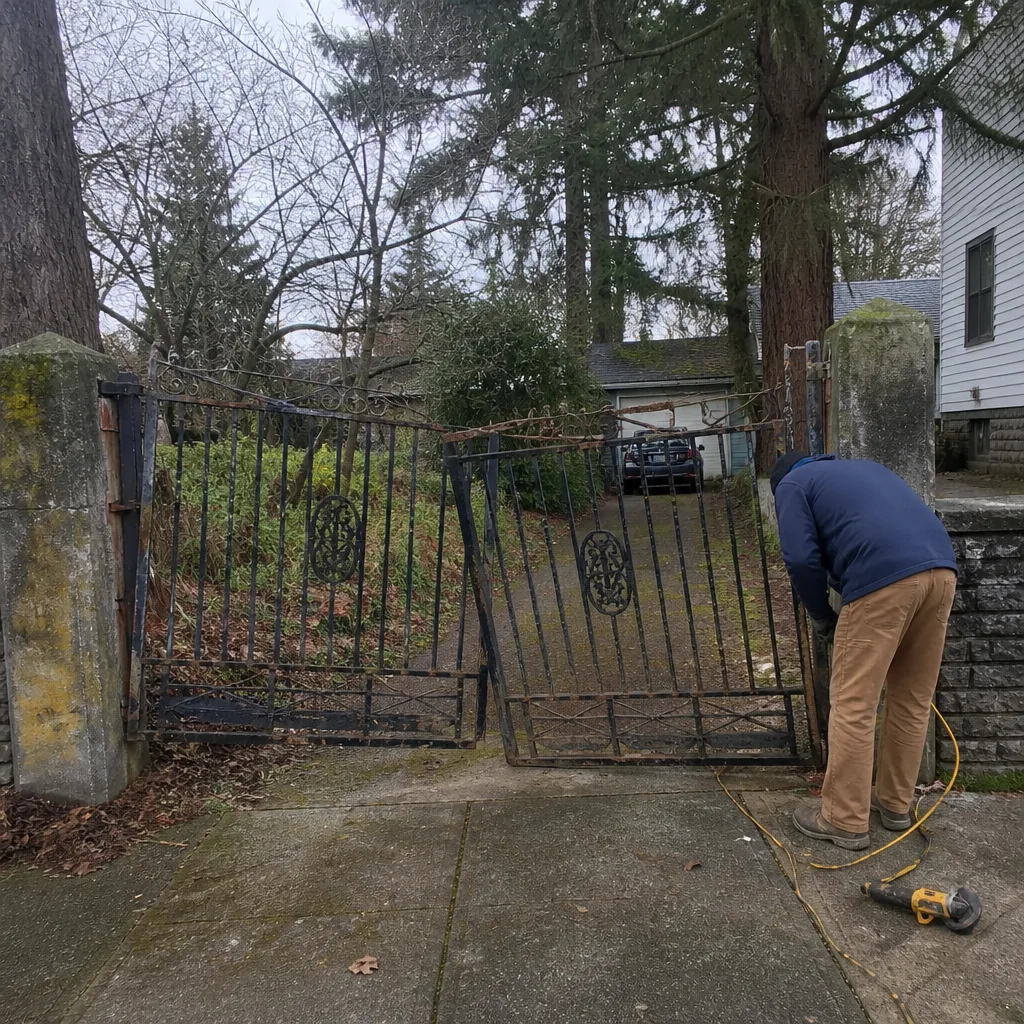 Before
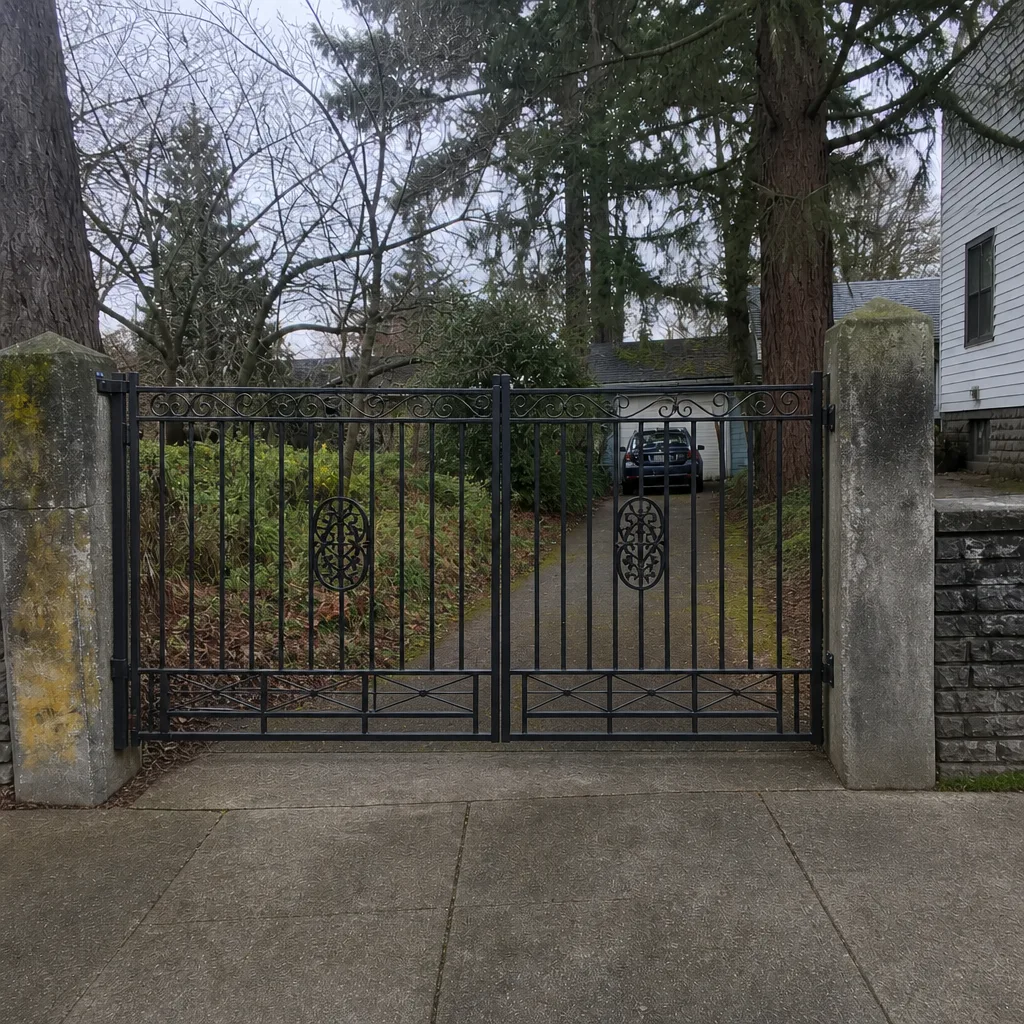 After
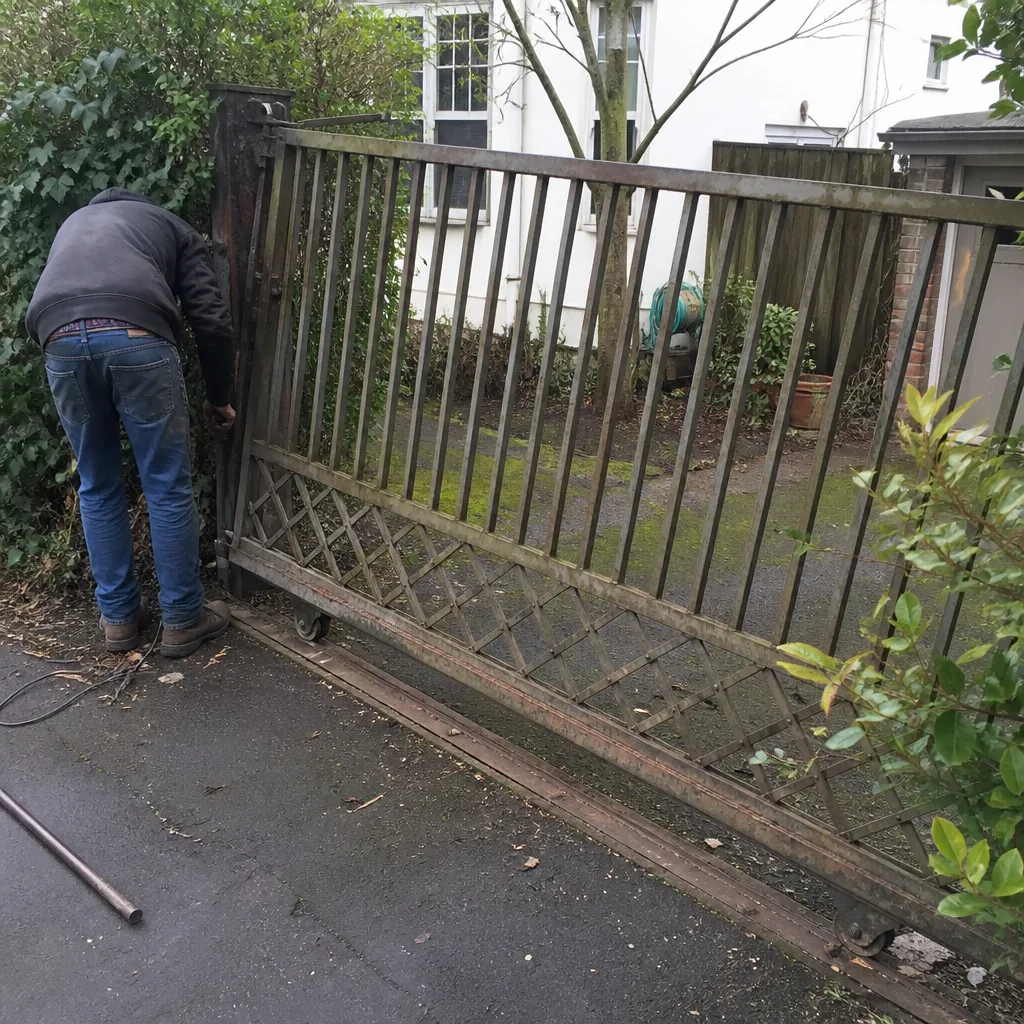 Before
 After
 Before
 After
Frequently Asked Questions
A gate in Laurelhurst should get at least two professional checkpoints a year: one in late summer before the wet season, and one in spring after freeze-thaw. Between those visits, weekly track clearing and occasional hardware checks keep small problems from becoming large ones. Gates on solar operators may benefit from an extra battery and panel check in the low-light months.
Erratic behavior after rain usually points to a loop detector sitting under standing water, moisture in the control circuit, or a safety edge that’s gotten damp. The loop is the most common suspect for a gate that opens and closes on its own or stays open. Call (844) 494-1604 for an exact diagnosis – estimates are free.
Seal wooden gates in late summer, once the wood has dried, before the sustained fall rain arrives. Sealing wet wood traps moisture and makes the problem worse. Late summer gives you the dry surface the sealant needs to bond and protects the wood through the wet season.
A slide gate that jumps track in winter is usually fighting buildup in the track or has lost support from a shifted post. Wet leaves and debris compress and freeze in the guide rails, and saturated soil lets the post move. Clear the track first, then check whether the gate moves freely by hand. If it doesn’t, call us.
Yes. We service solar operators, including common residential systems like Ghost Controls and Mighty Mule. Low light through the Laurelhurst winter is a real stress on a solar operator, so we check battery health, panel condition and charging performance. Call (844) 494-1604 for a free estimate.
Yes. Laurelhurst’s sustained wet and its freeze-thaw cycling in a narrow temperature band cause a different pattern of wear than colder or drier climates. The calendar here is built around water management, drainage and late-summer preparation – not the deep-freeze and dry-summer advice written for other regions.
The Bottom Line
Laurelhurst gates fail quietly, and the fix is almost always timing. Late summer is your highest-leverage window: seal wood, check footing drainage, drain pneumatic components and address mechanical wear while everything is dry. Clear tracks weekly through winter, watch for loop detector false triggers after heavy rain, keep an eye on solar operator performance, and run a spring recovery checklist after freeze-thaw. Do that, and your gate does its job quietly. Skip it, and you’ll meet us in February on an emergency call instead. When the calendar’s due, Gate Repair Laurelhurst handles the work.
Written by the team at Gate Repair Laurelhurst.